The cost of a poor decision, from a Risk Manager’s perspective
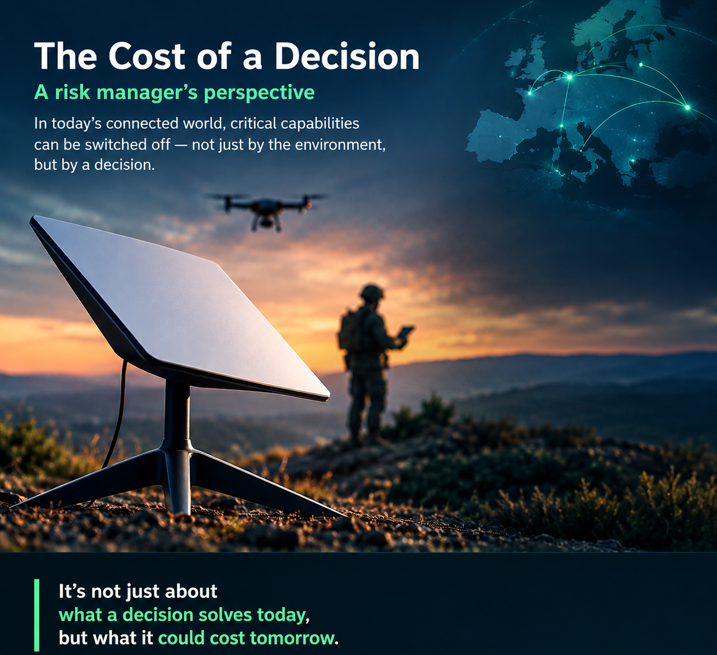
As a Risk Manager, one of the areas I continually emphasise to executives is the importance of decision making, not just the decision itself but the potential unintentional consequences of that decision.
This week’s disruption of Ukraine’s access to Starshield, the military grade satellite service operated by SpaceX, provides a powerful example.
Restrictions on the service reportedly affected Ukrainian drone operations, highlighting the risks of relying on “Critical Infrastructure” that can be restricted through decisions outside your control. The precise decision making chain remains contested, however the strategic lesson is clear.
What happens when critical business or military capability depends on a decision made elsewhere by either an individual or committee?
There are consequences beyond the immediate operational impact, these might include:
– Operational Resilience and Business Continuity
– Customer confidence and trust can be damaged
– Strategic or potential customers may accelerate plans to develop alternative suppliers
– Long term revenue and competitive advantage can be lost
The financial dimension is significant. SpaceX’s 2025 figures show that its Starlink led connectivity business generated approximately 61% of total company Revenue and was its “only” operating profitable segment.
That is a substantial strategic asset to protect.
Europe has said it will focus on developing its sovereign satellite communications capabilities. If they do and this replaces Starlink in Europe, that might have cost SpaceX 20-30% revenue (Speculative estimate). If more governments reassess their dependence that figure could grow.
For me that reinforces a fundamental principle of risk management and corporate governance:
Decisions should never be assessed solely on their immediate impact. We must consider the unintentional consequences, stakeholder reactions, strategic dependencies and the risks created by the decision itself.
Before making a critical decision ask:
“What could this solve today” and “What might it cost us tomorrow?”
#RiskManagement #DecisionMaking #StrategicRisk #Resilience #Leadership
The cost of a poor decision, from a Risk Manager’s perspective
As a Risk Manager, one of the areas I continually emphasise to executives is the importance of decision making, not just the decision itself but the potential unintentional consequences of that decision.
This week’s disruption of Ukraine’s access to Starshield, the military grade satellite service operated by SpaceX, provides a powerful example.
Restrictions on the service reportedly affected Ukrainian drone operations, highlighting the risks of relying on “Critical Infrastructure” that can be restricted through decisions outside your control. The precise decision making chain remains contested, however the strategic lesson is clear.
What happens when critical business or military capability depends on a decision made elsewhere by either an individual or committee?
There are consequences beyond the immediate operational impact, these might include:
– Operational Resilience and Business Continuity
– Customer confidence and trust can be damaged
– Strategic or potential customers may accelerate plans to develop alternative suppliers
– Long term revenue and competitive advantage can be lost
The financial dimension is significant. SpaceX’s 2025 figures show that its Starlink led connectivity business generated approximately 61% of total company Revenue and was its “only” operating profitable segment.
That is a substantial strategic asset to protect.
Europe has said it will focus on developing its sovereign satellite communications capabilities. If they do and this replaces Starlink in Europe, that might have cost SpaceX 20-30% revenue (Speculative estimate). If more governments reassess their dependence that figure could grow.
For me that reinforces a fundamental principle of risk management and corporate governance:
Decisions should never be assessed solely on their immediate impact. We must consider the unintentional consequences, stakeholder reactions, strategic dependencies and the risks created by the decision itself.
Before making a critical decision ask:
“What could this solve today” and “What might it cost us tomorrow?”
#RiskManagement #DecisionMaking #StrategicRisk #Resilience #Leadership